Timeless & Flattering Haircuts for Women Over 60 That Radiate Confidence
Facts:
- Hair density, scalp comfort, and strand strength can change noticeably after age 60.
- Hair management over 60 often combines styling strategy, scalp care, and density-support routines.
Beyond the Cut: Structural Volume, Density Restoration, and Hair Management Over 60
When women over the age of sixty evaluate new hairstyles, they often focus entirely on the visual silhouette of the cut—debating between a textured pixie, a graduated bob, or layered shoulder-length framing. However, professional trichologists and senior hair restoration experts know that a truly flattering style cannot be built on a compromised foundation. As the human body matures, the structural biology of the hair follicle undergoes a profound shift, directly altering structural volume, hair density, tensile strength, and sebum production.
For many women, entering this life stage brings noticeable changes, such as a widening part line, diffuse thinning across the crown, or a loss of natural elasticity. Simply shortening the hair to mask these shifts is a temporary fix. To achieve lasting volume, vibrancy, and scalp health, mature hair care must combine precise, structural styling techniques with targeted topical solutions and specialized care routines.
Understanding the Biology of Aging Hair and Structural Thinning
To manage mature hair effectively, it helps to look at the cellular changes occurring beneath the scalp. With age, the hair’s natural growth phase, known as the anagen phase, may shorten, while the resting phase, known as the telogen phase, may lengthen. This shift means hair can grow more slowly and spend less time reaching its full thickness. Concurrently, individual hair strands may physically shrink in diameter, a process commonly referred to as follicle miniaturization.
When structural miniaturization is paired with natural hormonal shifts, hair often loses its internal volume and structural bounce. If generic mass-market cleansing products packed with heavy synthetic polymers or harsh sulfates are used at this stage, they may weigh down the hair or strip the scalp of vital lipids. This can lead to brittle strands, increased breakage, and chronic dullness, making hair look thin regardless of how well it is cut.
The Intersection of Precision Cutting and Density Support
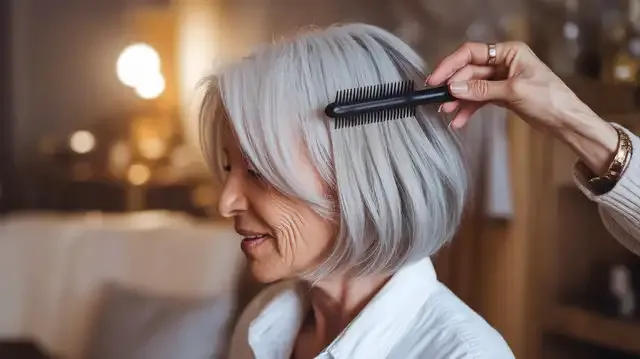
A great haircut for mature hair relies on strategic layering to maximize natural volume. Traditional long, blunt styles can pull hair down, emphasizing areas of lower density along the crown. Modern alternative styles use graduated layers, subtle texture, and face-framing angles to remove excess weight from the sides while building thickness and motion near the top of the head.
However, even the most precise cut requires a clean, active scalp environment to look its best. If the hair follicles are blocked by sebum buildup or styling residues, emerging strands may appear weaker and finer. Advanced care routines often focus on regular scalp stimulation, targeted exfoliating serums, and lightweight formulas infused with ingredients such as biotin, essential amino acids, and botanical extracts to support natural thickness and root strength.
Navigating Advanced Care Options
When addressing more pronounced thinning or changes in texture, relying solely on standard styling products is rarely enough. True hair revitalization often requires moving into specialized systems designed to target the root causes of density loss. Modern choices may include clinical topical solutions that support the hair growth cycle, targeted scalp treatments, and laser-based therapies designed to support follicle activity.
Before changing your signature style, take time to evaluate your current hair density, scalp comfort, and daily shedding patterns. If you notice persistent thinning, localized changes along your part line, or an unusual loss of natural body, it may be a sign that your hair requires more than a simple trim. Understanding the connection between hair management over 60, scalp care, and density support can help guide more informed decisions.
Practical Steps for Mature Hair Management
- Evaluate Hair Density: Pay attention to changes in the part line, crown area, and overall strand thickness before choosing a new style.
- Use Lightweight Products: Mature hair can become weighed down easily, so lightweight formulas may help preserve movement and volume.
- Support Scalp Health: A clean and balanced scalp environment can help hair appear fresher, fuller, and easier to manage.
- Choose Strategic Layers: Graduated layers, soft texture, and face-framing shapes can help create the appearance of natural volume.
- Review Advanced Care Systems: For noticeable thinning, specialized density-support routines or professional guidance may be worth exploring.
Frequently Asked Questions
Why does hair often become thinner after age 60?
Hair may become thinner after age 60 due to natural changes in the hair growth cycle, hormonal shifts, reduced sebum production, and gradual follicle miniaturization. These factors can affect both hair density and strand strength.
Can a haircut improve the appearance of mature hair?
A haircut can improve the visual shape and movement of mature hair, especially when it uses strategic layering and avoids excessive weight. However, a cut alone may not address scalp buildup, density loss, or structural thinning.
What type of hair care routine is useful for women over 60?
A useful mature hair care routine often includes gentle cleansing, lightweight conditioning, scalp-focused care, and products designed to support volume without weighing the hair down. For persistent thinning, professional evaluation may also be helpful.
References
- American Academy of Dermatology Association. Hair Loss: Diagnosis and Treatment.
- International Journal of Trichology. Hair Aging and Hair Disorders in Older Adults.
- Mayo Clinic. Hair Loss: Symptoms and Causes.
- Journal of Cosmetic Dermatology. Scalp Health and Hair Density Support.
Authored by Jennifer P.